
Milk
The Modern Days

One of the favorite tricks that all parents play is - "You are no longer in Grade 1". The 1 can be substituted with any other number and typically after that statement you are assigned a responsibility that typically is meant for someone of a higher age. For me, the number was 3 and with that announcement I was assigned the task of getting up in the morning and fetching the milk from the local "khatal" (खटाल) - cowshed. Every small town had four or five of these cowsheds and twice a day the cows (and buffaloes) were milked - once at 5-6AM and the next one typically around 12 hours later. As a responsible grade 4 kid, I was supposed to be at the "khatal" before the cow (in our case buffalo) milking process started to avoid the case of adulteration of milk. Before the milkman starts milking the cow, I was supposed to thoroughly check if the bucket was clean and did not have any existing water and other such critical things. A typical cow or buffalo in India gives 4-6 liters of milk per session (10-12 liter per day), which effectively means that given each family was consuming around a liter of milk, one session of the cow milking was good enough for four families. As soon as the four representatives of the four distinct families were together, the milkman would start milking the cow and unfortunately in that group of four representatives, I was the youngest. A different tune of "You are no longer in Grade 1" was played and as a part of assigning the responsibility, I was given the task of handling the cow. A large thick bamboo stick was given and whenever the cow "misbehaved", the milkman would shout at me to hit the cow on the face with the bamboo stick which I obediently followed to put the cow in discipline. Thankfully there were no CCTV cameras - If the animal rights activist would have seen those videos, I would have been awarded at least six back to back "Life in prison" with no option of parole. But that was the norm in the 80s.
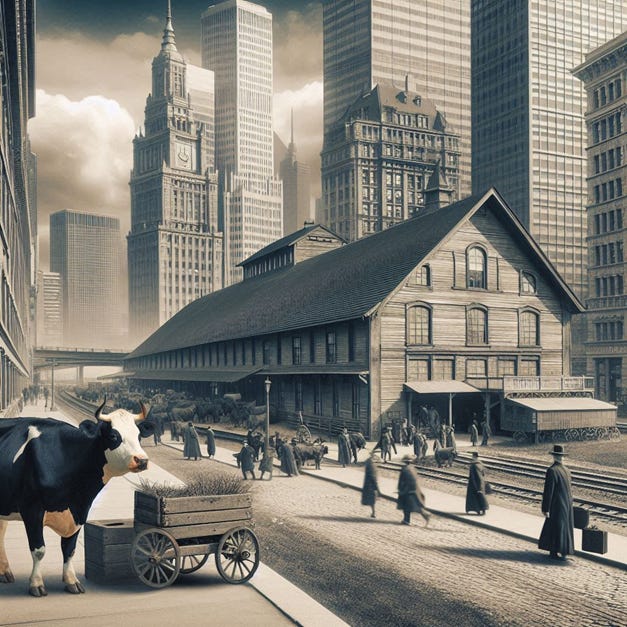
When my friends from the West visit India two things blow them away in the Indian traffic - one is the sight of a two wheeler scooter or motorcycle that easily fits a family of 5 adults with two kids and the second one is a cow sitting royally in the middle of the road. After going through this weekend muskiri on milk, I do have a point to add next time - there was a point in history where both London and New York had cows roaming around on its street. In the16th century England, farmers lived close to London and would come to the city to sell milk. The farmer would roam the streets, announcing his presence, and women, whether homemakers or domestic workers, would emerge with containers or vessels, and he would directly milk the warm, frothy liquid into their receptacles. This method offered several benefits. The milk was exceptionally fresh, and the customer could scrutinize the cow to ensure its health and proper care. As London grew, it created parks like Hampstead Heath, originally a distinct village, as well as St. James's Park and Lincoln's Inn Fields, and allowed cows to graze within them. St. James's Park gained renown for its high-quality milk, prompting wealthy London residents to send their servants there to procure it (like our "khatal" (खटाल)). However, the shift from selling fresh milk door-to-door marked the start of a perilous decline in urban milk quality. Women and milkmaids would milk the cows in the parks and transport two pailfuls slung from a bar across their shoulders through the city. This exposed the milk to soot, debris, and other urban contaminants, as the pails were left uncovered and not regularly cleaned between milkings. Likewise, when dairies emerged near towns and cities, milk was carried in open pails or exposed baskets strapped to donkeys. Some historians observed a decrease in milk's esteem among city dwellers in the 16th century. Similar to ancient Romans, they began viewing it as a food for the impoverished, possibly due to the unhygienic handling of milk - arriving in open containers with twigs, insects, and dirt floating on the surface - which contributed to this aversion.
And London was not an exception. There was a time in history when cows were a common sight on the streets of New York, much like what can be seen in Bangalore today. The culprits - the Dutch who created NY in the 1600s and brought cows along with them. There were no cows or any type of cattle in America until the Europeans introduced them. While there were various breeds of goats and sheep, none were milked, and attempts to domesticate or milk the North American bison were nonexistent. Similarly, the llama in South America, which produces excellent milk and is easily farmed, was never milked, despite living near the advanced Incan civilization. Llamas were domesticated for carrying loads, and alpacas were used for their wool. From the Arctic Brooks Range of Alaska to the Antarctic tip of Patagonia, dairying was unknown, largely because most people were lactose intolerant. In the Americas, humans, like other mammals, provided milk only to their own young. In certain instances where milk was necessary for the survival of an animal, women supplied it, as documented among some Canadian tribes, the Puma of the Sioux nation, and some Amazonian tribes. After Europeans arrived in the Americas, they brought cows with them because they couldn't imagine living without milk. There was no debate about which milking animal to bring, as it was logical to transport the animal that produced the most milk per head for the long ocean voyages.
The Dutch had a strong tradition of dairy farming but it was not an easy journey. There was a point in history when the rest of Europe looked down at the Dutch. The Dutch transformation started in the thirteenth and fourteenth centuries when they developed expertise in reclaiming land from the sea by building dykes and creating polders, drained patches of seabed. This innovation led to significant advancements in cattle breeding and land management. In Friesland, a province with its own language, farmers excelled at cross breeding livestock to produce cows with higher milk yields. From the mid-sixteenth to mid-seventeenth centuries, the value of Dutch cows increased fourfold. The Dutch began to understand optimal cattle feeding and pasture cultivation, resulting in a substantial rise in milk production in Friesland, Flanders, and Holland. Dutch cows produced more than twice the milk of those in neighboring countries, making milk more abundant in the Netherlands than in most of Europe. As the Netherlands gained independence from Spanish rule in the 1590s and transformed into a republic, it rapidly emerged as a global trading empire and the leading maritime and economic power of the world. This shift led to a change in European perceptions of the Dutch, who were once seen as simpletons who drank milk and ate cheese but were now recognized for their genius in art, science, engineering, and dairying. The Dutch dairy farms, with their superior pastures, cows, and below-sea-level farming techniques, were now admired for their brilliance.
The various European nationalities that migrated to the Americas shared two key practices: they all consumed beef and dairy products, and they all sought to replicate their old-world lifestyle in the new land. This mindset largely contributed to their perception of the native peoples and cultures as obstacles. While they did incorporate some local foods like corn and turkey into their diets, they primarily focused on quickly importing European foods. This contrasts sharply with what happened in India. When the Aryans and Muslims arrived, they assimilated into the local culture, leading to a blend of cultures and cuisines. Interestingly, the Sanskrit word for milk is "Kshir" (which I can assure you more than 90% of Indians are unaware of, and certainly 98% wouldn't spell it correctly as क्षीर). However, the commonly used term for milk in India is "Doodh" (दूध), which is derived from the Persian word "doogh" (which, unsurprisingly, means to milk an animal).
From the sixteenth to the eighteenth century, the practice of "artificial feeding" - giving babies animal milk - began to gain popularity. This trend was influenced by various factors, including scientific discoveries about the components of milk, the growth of cities, the Industrial Revolution, and perhaps even the advent of fashionable clothing for women. In the eighteenth century, scientists began to analyze the composition of different types of milk and proved that animal milk was indeed close to human milk. Donkey’s milk was the closest to human milk, followed by goat’s milk. Consequently, donkey’s and goat’s milk became highly sought after for feeding children. Despite this, cow’s milk remained the most commonly used due to its easy availability. Milk consumption rose with the expansion of cities, where it became the favored alternative to breastfeeding and the preferred food for weaned toddlers and children. Milk was considered beneficial, with a trend for the “milk cure,” involving six weeks at a milk home consuming six quarts daily. Interestingly, some genuine health benefits of milk, like the importance of calcium and phosphorus for bone development, were not yet known. With the industrial revolution and urban growth, breastfeeding was viewed as primitive, and it was believed that modern, urban women were no longer good sources of nutrition, making animal milk a preferable option. In the seventeenth and eighteenth centuries, and even as far back as the sixteenth century, wealthy women who considered dairying a pleasant hobby were also mothers inclined to feed their babies animal milk. This trend was mirrored in their clothing, although there's a potential chicken-or-egg debate here. Previously, women's clothing had been loose-fitting, facilitating breastfeeding. However, upper-class fashion evolved to feature tight bodices and dresses that flattened and restricted the breasts, making breastfeeding difficult and potentially harmful to lactation. These women wore stiff leather corsets with whalebone or metal, laced so tightly they sometimes fractured ribs. Concurrently, the wealthy began to view breastfeeding as an activity for the lower class.
While "artificial feeding" with animal (cow) milk was becoming popular, often out of necessity due to a lack of wet nurses, milk remained unsafe, particularly in urban areas. For example, in New York, where the Dutch had settled, the quality and safety of milk were significant concerns. From the early days of colonization, Manhattan distinguished itself as a dairy hub due to its settlement by the dairy-enthusiastic Dutch. Unlike the English, the Dutch actively recruited dairy farmers for their colony. Even after the British takeover in 1664, transforming New Amsterdam into New York, the area continued to produce and consume a significant amount of dairy, with the Dutch maintaining their dairy farming into the next century. Butter and buttermilk were particularly popular, with bread and butter being a standard breakfast and dinner option, and milk with bread often consumed for breakfast or dinner. Despite the British introduction of coffee, tea with milk remained the preferred hot drink, and cheese was commonly served at both breakfast and dinner. As New York City urbanized, the tradition of owning a cow or two persisted. By the nineteenth century, cows were often staked and fed garbage. Property owners rented out spaces for these cows and claimed their manure, which was valuable to farmers. This practice contributed to the city's odor problems, exacerbated by existing sewage issues. In contrast to the meticulously maintained Dutch farms in Europe, hygiene was not a priority in New York City. Cows lived among garbage, and milk was stored in open pails. Street vendors carried these pails with a shoulder yoke, ladling milk out to customers. In the nineteenth century, the vast lands of the Western territories and states became the main producers of grains and other crops in the United States, outpacing the East. New England farmland was already showing signs of exhaustion. However, with limited space, the East, particularly New York City, excelled in dairy production. Improved transportation allowed milk to be brought to the city by steamboats on the Hudson or by train, but the lengthy transport time on hot summer days made the milk risky to consume. Ironically, despite cities being the worst places for raw milk, urban areas were where milk drinking first gained popularity.
As demand for animal milk in cities increased, its quality deteriorated. A few cows staked here and there were insufficient to meet the needs of many customers. Large stables housing hundreds of cows were established next to breweries, making milk production a profitable business. The leftover mash from brewing beer was used to feed the cows, but this resulted in low-fat, watery milk with a light blue color. To improve its appearance and taste, producers added annatto for color, chalk for body, and sometimes molasses for sweetness. By the 1840s, infant mortality in Manhattan was extremely high, with nearly half of the babies dying, primarily from cholera. There were many theories about this high mortality rate, but Robert Milham Hartley, a temperance advocate, was the first to link it to the milk produced in brewery dairies. Hartley reported that around 10,000 cows in New York City and nearby areas were fed on brewery waste, kept in filthy conditions, and milked even when sick or too weak to stand. He identified 500 dairies in Manhattan and Brooklyn producing 5 million gallons of adulterated milk annually. Hartley's 1842 book, "An Essay on Milk," raised awareness about the dangers of "swill milk" and its potential connection to rising infant mortality rates. By 1848, the New York Academy of Medicine confirmed that swill milk had significantly less nutritional value than farm milk. The problem of microorganisms in milk was not understood until later, exacerbating the health risks. By 1855, New Yorkers spent $6 million annually on milk, most of which was swill milk, coinciding with increasing infant mortality rates. In 1857, the Brooklyn Common Council investigated and reported on the appalling conditions in brewery dairies. The report, supported by Frank Leslie’s Illustrated Newspaper, led to public outrage and the eventual closure of many brewery dairies. Milk purity laws were enacted, and the invention of the lactometer in the late nineteenth century allowed for the enforcement of these laws, ensuring milk quality. Ironically, modern low-fat milks, popular today, would have been illegal under nineteenth-century standards due to their lower fat content.
Interestingly, Napoleon Buonaparte can take the credit for the first set of innovations on milk packaging to fix some of the above highlighted issues. His famous statement - "An army marches on its stomach". Challenged by this statement, Nicolas Appert, a chef and maker of candy and liqueurs, spent fourteen years developing a method to prevent food spoilage. He discovered that if food was sealed in a glass jar and heated, it would not spoil. He tested this with various foods, including vegetables, stews, fruits, jam, and milk, though the milk had an unpleasant taste. Appert documented his method in a book, which was translated into English in 1809. Soon after, a Londoner named Peter Durand patented the same idea and proposed using containers other than glass jars. Following this, Bryan Donkin established the first canned food factory on the Thames. It took a good 80 year, for this idea to come to America and the credit goes to Henry G. Thatcher. According to legend, in 1883, Dr. Henry G. Thatcher of Potsdam, New York, was in line to buy milk when a little girl ahead of him dropped her dirty rag doll into the vendor's milk bucket. The vendor calmly retrieved the doll, shook it off, returned it to the girl, and then served Dr. Thatcher his milk. This incident, whether true or not, highlights the lax attitude towards milk hygiene at the time. Inspired by this experience, Dr. Thatcher patented a sealable milk bottle a year later. While not groundbreaking, given Appert's sealed jars from eighty years prior, it marked a significant advancement towards safer milk storage.
Once milk went into a bottle it promoted the next set of ideas - add other ingredients to milk - and this led to the formation of one of the current Fortune 100 companies - Nestle. In the 1860s, many doctors and household guides recommended mixing milk with combinations of water, cream, and honey. In 1867, Henri Nestlé, a German pharmacist in Switzerland, created a mixture of fresh milk, wheat flour, and sugar for a neighbor's sick child, who then recovered. Seizing the opportunity, Nestlé bottled his formula and claimed it saved the child's life. Whether or not the story about the neighbor is true, Nestlé's formula, which he called "Swiss milk and bread," was the first commercially sold bottled infant formula and marked the beginning of the Nestlé company in Vevey, Switzerland.
Formulas convinced many women, particularly those who could afford it, that they could find a suitable substitute for breast milk. A late nineteenth-century study in the United States revealed that 90 percent of working-class women still breastfed, while only 17 percent of middle- and upper-class women did. In the twentieth century, with the advent of safe pasteurized milk and better commercial formulas, breastfeeding rates declined even more. By 1950, more than half of all American babies were fed formula, a trend also boosted by the invention of canned evaporated milk in the nineteenth century.
In 1828, William Underwood, America’s first commercial canner, tried preserving milk in a bottle with sugar, but it didn’t sell. In 1847, Francis Bernard Bekaert improved the formula by adding carbonate of soda. That same year, Jules Jean Baptiste Martin de Lignac patented a process that reduced milk to one-sixth its volume with added sugar, but these efforts failed because the milk fat separated, resulting in an overcooked taste. Today, Gail Borden is credited with inventing condensed or evaporated milk. Though he didn’t actually invent the process, he was the first to make preserved milk appealing and commercially successful. Borden’s initial method involved boiling milk with molasses, but the resulting product was unattractive and had an unpleasant smell. In 1853, Borden visited a Shaker community in New Lebanon, New York, to see a vacuum pan, a device invented by Edward Charles Howard in 1813 for refining sugar. The vacuum pan allowed liquids to evaporate at lower temperatures. Eighteen years before Borden’s visit, William Newton had been the first to use the vacuum pan for milk, but he never marketed his idea. Borden’s early attempts with the vacuum pan were unsuccessful, as the milk stuck to the sides. After greasing the pan, he produced a better-tasting condensed milk. Despite initial rejections from the patent office, Borden was awarded a patent in 1856 for condensed milk made in a vacuum pan with added sugar. His "sweetened condensed milk" hit the market in 1860, just as concerns over swill milk were growing in New York. Borden offered a safe, sweet alternative in a can, which appealed to worried parents.
Of course the biggest impact in making milk safe came from Louis Pasteur. For those who find it curious that the French, who traditionally showed little interest in drinking milk, had a significant impact on milk production, it's worth noting that Louis Pasteur himself was not particularly focused on milk. His primary research and interests were in beer and wine. However, his "germ theory"—initially met with skepticism—revolutionized dairies, public health, and medicine. Pasteur's theory, though simple in concept, was complex to prove: it proposed that tiny, invisible organisms cause disease and other processes like fermentation. This theory clarified why milk could cause illness, why unsanitary dairies were more dangerous, and why fermented milk products like cheese and yogurt were safer, even in warm weather.
In the 1880s, the concept of sterilized milk reached the United States, promoting the idea that boiling and cooling milk could save babies' lives. Pasteur had developed the sterilization process in the 1850s and 1860s while a professor in Lille, a region known for its distilleries. Initially aiming to understand why liquids spoiled, he hypothesized that all fermenting substances contained living organisms. Milk was chosen for his experiments due to its perceived simplicity, though it proved more challenging than expected. Nevertheless, Pasteur demonstrated that lactic acid fermentation was caused by living organisms. By the time "pasteurization" was applied to milk, Pasteur was nearing the end of his life, passing away in 1895 at seventy-two. Although he developed the pasteurization process in 1864, it took decades for scientists to apply it to milk. They discovered that heating milk just below boiling for twenty minutes and then rapidly cooling it prevented souring and disease transmission. However, this process also killed beneficial bacteria, which is why many cheesemakers avoid using pasteurized milk. Critics argued that pasteurized milk was "dead," but proponents countered that pasteurization preserved nutritional elements better than boiling. This new science led to two public health approaches regarding milk: the government could mandate pasteurization despite public distaste, or it could establish an inspection system to ensure the quality of raw milk, known as "certified milk."
Another lesser known person who should be credited in making milk safe is Robert Koch. Bovine tuberculosis, a disease in cattle, is transmitted to humans through milk, affecting glands, intestines, and bones. Survivors often become hunchbacked or deformed, with children being particularly vulnerable and sometimes requiring braces for years to prevent spinal deformities. In 1892, the United States began testing all dairy herds for bovine tuberculosis. The test, developed accidentally by Robert Koch while attempting to create a vaccine, relied on an inflammation reaction at the injection site in infected cows. The results were alarming, revealing that a substantial portion of American cows - and thus American milk - was infected. Removing these cows from herds significantly reduced the incidence of bovine tuberculosis in humans.
Due to these process changes and the momentum of the industrial revolution, it became feasible to industrialize the dairy industry. Over the past 150 years, the industry has been thoroughly industrialized. Two key developments were pivotal: advancements in milk preservation, which enabled transportation over longer distances, and the invention of the milking machine, which reduced reliance on human labor and facilitated the creation of very large dairy farms. The Anglo-Swiss Condensed Milk Company started its operations in Europe and by the 1880s was producing 25 million cans of condensed milk annually. This method of preserving milk was particularly beneficial in regions like Wisconsin and Switzerland, where milk production outpaced sales. Condensed milk also solved the problem for Australia, which relied on long-distance exports. In the early 20th century, the small town of Toogoolawah in South Queensland opened its first condensed milk plant. In 1929, Nestlé merged with Anglo-Swiss, acquired the plant, and relocated it to Victoria as part of a strategy to establish condensed milk facilities across Asia. Once pasteurized milk was considered safe, condensed milk became popular because it was cheaper than fresh milk or cream. Condensed milk became profitable, leading many companies to start producing it. The quality of both the cans and the milk improved. In 1909, the problem of fat separation was finally solved by homogenization, a process that forces milk through a fine screen to break the fat globules into tiny particles, preventing separation. This method, initially developed in France in the 1890s by Paul Marix for margarine production and refined by others working on artificial butter, greatly extended the shelf life of evaporated milk.
The advent of machine milking revolutionized the dairy industry, transforming it into a true industry. Hand milking, a slow and arduous process, limited herd sizes to around forty cows in pre-nineteenth-century times due to time constraints and labor costs. The initial concept of milking machines emerged in the mid-nineteenth century, involving inserting a tube into the cow's teat to facilitate milk flow into a bucket. However, these early models were primitive and often caused health issues in cows and humans while also damaging cow teats. The British later explored pump-based milking machines, with inventors patenting devices featuring cups for teats and a pumping suction mechanism between 1860 and 1862. William Murchland's vacuum pump milker in 1889 could handle two cows simultaneously, showcasing the drive to increase milking efficiency. Despite advancements, early mechanical milkers faced challenges like the inability to adjust to the changing size of teats during milking and pumping milk back into the udder. Innovations in the 1890s, including teat-massaging machines and double-chambered teatcups, addressed these issues. This allowed farms to manage larger herds without extensive labor, introducing milking parlors where multiple cows could be milked simultaneously. Modern machines streamlined the process, automatically detaching cups after milking, while cows had access to forage during milking for a more comfortable experience. The shift to larger dairy operations marked the decline of smaller farms. While the number of cows per farm increased significantly, the overall cow population decreased as smaller farms closed. However, advancements in technology and breeding led to a substantial increase in milk production per cow over the decades.
Unlike the cows, the bulls are difficult to handle. But then we devised plans to solve that problem as well. The only job of the bull is in breeding. Breeding's significance was acknowledged in Europe well ahead of its recognition in America. During the eighteenth century, British farmers began understanding the crucial role of the bull's quality in producing high-quality offspring. John Lawrence, in 1726, stressed the importance of male animals in breeding, despite some questionable reasoning, highlighting the need for attention to the bull's traits. British farmers realized that breeding a top-notch cow with just any bull, termed "everybody’s son," was wasteful. They established criteria for desirable bull traits, focusing on features like a broad forehead, large black eyes, long horns, smooth hair, thick neck, big chest, and square buttocks. This led to the creation of different breeds, with Dutch cows renowned for their milk productivity being introduced to English farms for breeding or cross breeding purposes. Breeding practices underwent a significant shift, with high-yield cows and superior bulls considered breeding stock. The development of artificial insemination in the 1930s and 1940s greatly enhanced breeding efficiency, eliminating the need for farmers to handle dangerous bulls directly. Today, farmers rely on performance records rather than visual appearance when selecting bull sperm, a practice that some argue disconnects them from their animals' true nature. Artificial insemination has revolutionized breeding, allowing for meticulous record-keeping and the development of exceptional bulls whose sperm is widely used. This level of precision and efficiency would have been impossible with natural breeding methods. Breeding centers can now produce standout bulls like Badger-Bluff Fanny Freddie, born in 2004, who had already sired 346 daughters by May 2012.
The process of industrializing dairies and cheese production led to a significant reduction in employment opportunities for women. Traditionally, women were responsible for tasks such as milking cows, making cheese and butter on farms worldwide. In urban areas, many milk vendors were women who worked tirelessly with heavy buckets, often carrying around seventy pounds, throughout long days. In London, they were known for their distinctive cry of "Miow," signaling the availability of milk. Even on wealthier farms with hired help, women were typically employed for dairy-related work under the supervision of the lady of the house. However, with the onset of industrialization, women were gradually phased out from dairy operations, except on smaller family-owned farms.
Majority of the Chinese population is lactose intolerant and that is one of the reasons why dairy is not a prominent part of Chinese cuisine. The origins of China's dairy industry can be traced back to the opium wars of the 1840s, which revolved around disputes over Chinese sovereignty and Britain's trading rights in China. During this period, high-quality British breeds like Jerseys and Ayrshires were introduced into China to supply milk to the affluent classes, earning them the nickname "city cows" as they were typically raised near urban areas where wealthy Chinese resided. In the post-revolution state-controlled economy of 1953, around 4,700 milk cows were managed by the state, each yielding approximately 12 liters of milk daily. However, in 1957, the government initiated a dairy program as part of its broader agricultural development strategy, placing it under military administration. Despite concerns about lactose intolerance among the Chinese population, the objective was not universal milk consumption. With a population of 1.4 billion in 2017, even if nine out of ten Chinese abstained from milk, there would still be 139 million milk consumers - a figure surpassing the population of any European country. Thus, the rationale was that despite low overall consumption, milk could still cater to a substantial number of people. By 1978, state-owned dairies were managing 480,000 cows and producing enough milk to provide each person in China with one liter annually. However, consumption fell short of expectations initially due to limited refrigerator availability, which only became widespread in the mid-1980s. By 2002, 87 percent of Chinese households owned refrigerators, leading to a tenfold increase in milk production between 1978 and 1992. Interestingly, among the 40 percent of Chinese who consume milk, a larger portion prefers imported powdered milk over domestically produced milk. This shift is partly attributed to declining breastfeeding rates, as many women return to work 40 days after childbirth, making breastfeeding impractical. Additionally, bottle-feeding has become fashionable in China, especially among women striving to appear modern. Furthermore, socioeconomic factors sometimes compel poorer women with inadequate diets for breastfeeding to resort to bottle-feeding. With the abandonment of the one-child policy and an anticipated rise in birth rates, the demand for infant milk is expected to grow further.
In contrast to the Chinese, we Indians have a strong affinity for milk and are the largest milk producer and consumer across the globe. A significant portion of vegetarians would consider adopting a non-vegetarian diet if paneer (cottage cheese) were excluded from their food options. Cow is the symbol of motherhood in India. Before villages were modernized with LPG connections, cow dung served as the main fuel source in several rural areas, aside from cows producing milk. The prohibition of cow slaughter in many regions of India is mainly due to the influence of Hinduism, which forbids this practice. Looking back into history, and if we agree that religion is the most enduring economic institution, the ban on cow slaughter can be traced to economic reasons. Why slaughter a cow that can provide sustenance for a few days when it can offer milk and fuel for many years? Embedding this ban within religious doctrine was an effective way to enforce this rule.
Apart from the religious aspect, we Indians should also appreciate the role of milk, albeit not a pivotal one but still noteworthy, in our fight for Independence. The town Anand in Gujrat gained renown during the final years of British rule due to a confrontation between local dairy farmers and the dominant private dairy company Polson, headquartered in Bombay. Polson, a British company, had established a virtual monopoly in Anand, leaving farmers with no alternative buyers for their dairy products. Despite increased processing capacity and milk demand, all profits from these developments were funneled exclusively to Polson, as orchestrated by the British administration. The Patidar, a significant peasant caste in Anand known for its nationalist fervor, were aggrieved and primed for rebellion, making them easily mobilized. Recognizing the political significance of this situation, Sardar Vallabhbhai Patel, 'the Iron Man of India', saw an opportunity. He orchestrated a boycott, leading farmers to withhold milk from Polson. Instead, he organized a cooperative to collect their milk and transport it by rail to Bombay. In these actions, Patel followed in the footsteps of Mahatma Gandhi, who had previously organized a 241-mile march across India in 1930 to protest against the British salt monopoly.
That cooperative is now called Amul - the A as you can guess stands for the city where it all began, Anand, and the rest three alphabets stand for Milk, Union, Limited. It was originally called the Kaira District Co-operative Milk Producers' Union and later got renamed to Amul. Anybody who has grown in the 80s, would know Amul for the creative newspaper advertisement where their ads resonated with the current political or sports news. The two that I loved from the recent past were its tribute to Pele which had the caption 'SimPELE the best" and when MSD won the world cup - "O Captain, Mahi Captain". Even the one in politics when AAP party did a clean sweep in Delhi their ad was - "Clean Sweep. Always AAParajit" and when BJP won, given their lotus symbol, their ad was 'Kamaal ka performance" - Kamaal referring to lotus. Amul continues to show its shrewedity in picking the ad sports as well - in the current world cup instead of spending millions of dollars in getting its logo on the Indian world cup squad it is sponsoring USA and South Africa for a fraction of the cost and getting similar eyeballs.
While Amul dominated the dairy industry in India, one place where it failed to capture a large market in India is Baby Formula. Nestle continues to dominate this market in India. The baby formula industry experienced massive growth, currently it has a market of around $70 billion, with Nestlé holding over half of the market share. Much of this growth occurred in poorer countries, driven by extensive advertising campaigns promoting the health benefits of formula. Hospitals often distributed formula, as market research indicated that most mothers who received it there would continue using it at home. Later investigations revealed that some individuals posing as nurses in maternity wards were actually Nestlé sales representatives. The United Nations World Health Organization estimated that between India, Nigeria, Ethiopia, and the Philippines, five million bottles were being distributed annually. Health experts in these countries then noticed a significant increase in infant mortality, gastroenteritis, and malnutrition, directly linked to formula use. The issue wasn’t with the formula itself, which was not toxic or lacking in nutrition, but rather its unsuitability for the developing world. The formula, typically in powder form, needed to be mixed with water. Most poor women had limited access to clean water, and while they could boil water for the required twenty minutes, this was often unaffordable due to fuel costs. Even shorter boiling times were insufficient. Additionally, although mothers understood the need to wash bottles between uses, the water available was frequently contaminated, leading to infections. When mothers left the hospital with a small supply of free formula, they often found themselves unable to breastfeed once it ran out. Purchasing more formula proved prohibitively expensive, consuming a large portion of the family’s income. As a result, mothers would dilute the formula with water, often tainted, meaning babies received mostly contaminated water, leading to numerous health issues and fatalities.
In 1977, there was a huge boycott of Nestle products - the Swiss multinational corporation adds sugar to their products sold in poorer countries and other such mal practices to promote its product. The scandals in milk would be a never ending story - one of them comes from the atom bombs. The nuclear era began in 1945 with the U.S. bombings of Hiroshima and Nagasaki. Rather than deterring nations, these events triggered a nuclear arms race. While the Japanese dealt with the devastating effects of radiation, the U.S. government denied such consequences and continued conducting above ground nuclear tests, releasing toxins into the atmosphere. In 1949, the Soviet Union detonated its first atomic bomb, followed by Britain in 1952. By then, the U.S. was testing more powerful hydrogen bombs in the South Pacific, and in 1953, the Soviet Union began hydrogen bomb tests in Siberia. Scientists estimate that from 1945 to 1958, the combined power of global nuclear explosions equaled 800 times that of the Hiroshima bomb. Each detonation released microscopic radioactive particles into the atmosphere, some of which, like strontium-90 and iodine-131, did not dissipate. Strontium-90 accumulates in bones and can lead to cancer, leukemia, or premature aging, while iodine-131 targets the thyroid gland, also causing cancer. These radioactive elements contaminated plants, which were eaten by cows, thus entering the milk supply and affecting those who consumed it. By 1958, tests in forty-eight U.S. and Canadian cities showed that strontium-90 levels in milk had at least doubled from the previous year. Despite government reassurances that these levels were safe, many people, including scientists, were skeptical. In 1962, health officials discovered such high levels of iodine-131 in Salt Lake City milk that they advised people to avoid drinking it.
Then there is a set of controversy around the cow feed itself. The increase in milk production per cow is partly due to higher-protein feed. Modern farmers focus more on cultivating high-protein crops like alfalfa and corn than in the past. Even grass-fed cows are provided with fodder to sustain them through the winter. Depending on local growing conditions and available purchases, a variety of crops—such as oats, barley, corn, alfalfa, sorghum, millet, and clover—are stored for winter use. Some farmers ferment these mixtures to create silage or blend the cereals, which can be richer in protein than field grass. And the next step to increase the level of protein in the feed was to put cheap meat and bone in the feed, despite the fact that cows are herbivores and are not supposed to consume meat. The result - mad cow disease - that continues to plague us every now and then.
The controversies around purity of milk will never stop, especially given in the science enabled world where we can measure a minuscule radioactive element in our milk. While WWII can be held responsible for the radioactive element in our milk, it was equally responsible to promote one of the popular milk that many of us drink - skim milk. World War II transformed skim milk from a locally used byproduct into a product with national and international appeal. Although dairy manufacturers knew how to produce skim milk powder at the turn of the century, it was not until World War II that changing cultural norms and increased government funding for powder production made skim milk a valued human food. Wartime demands and military contracts boosted production and fostered its development. However, after the war, skim milk faced many of the same challenges as before. Whether it was considered "trash" or "treasure" remained an open question into the 1950s. Technological advances in milk drying and nutritional research in the 1920s and 1930s helped change its reputation. Creamery operators found that drying skim milk turned a dairy byproduct into a marketable product. Dried milk powder production increased in the late 1920s and 1930s as farm families began delivering whole milk to creameries. The reduced bulk and lack of refrigeration needs made dried skim milk easier to transport and store, even in tropical climates. By 1925, enough interest had been generated to form the American Dry Milk Institute for research and promotion. Skim milk powder found uses in animal feed, baking, confections, and ice cream.
Changes in nutritional policy and government distribution of skim milk laid the groundwork for its acceptance as human food. In the 1910s, the focus on butterfat's vitamin A overshadowed skim milk's value. By the 1930s, nutritionists recognized skim milk's protein, calcium, phosphorus, riboflavin, and digestive benefits. Promoters encouraged its use in bread, baked goods, cottage cheese, ice cream, and for relief purposes. The USDA distributed it to southern grocery stores during a 1929 drought, blending it with cornmeal to prevent malnutrition. The 1934 Jones-Connally Act further familiarized Americans with dry milk powder, despite its association with poverty. In the 1930s, dry milk manufacturers also found a lucrative market in animal feed, particularly for chickens. As poultry farming became more confined, skim milk was promoted as a nutritional supplement. This market grew as it supported the quick growth and health of chickens. In the postwar era, with rising whole milk prices, milk companies began selling skim milk on its own merits. They marketed it as a weight-loss aid, securing the support of physicians. This endorsement shifted skim milk's image from a low-cost relief food to a desirable product for health-conscious, high-income consumers. By the 1950s, weight-conscious consumers became the largest market for skim milk, transforming its reputation and increasing its acceptance.
Another great nineteenth century innovation in milk that most folks of my age in India will definitely recognize is Horlicks. James Horlick, a pharmacist from Gloucestershire, England, moved to Chicago in the 1870s to work for the Mellin Company, which specialized in infant food. Horlick devised a modified product for dyspeptics and, with the help of his brother William, established a thriving business selling cans of roasted grain and dried milk as health food. Today, "malted" is associated with a sweet, distinctive flavor rather than nutritional or therapeutic benefits. While malted drinks are high in sugar, they are also rich in riboflavin (vitamin B2). In the late 19th century, malted grain evoked images of heartiness and beer brewing, yet Horlick marketed his product with a temperance appeal, leading to instant success. For most folks of my generation, milk was mixed with either bournvita or horlicks. And for kids, who did not like milk, the mothers will mix horlicks with hot water.
The other big influence of milk in the nineteenth century was in the chocolate industry. The history of chocolate, intriguing on its own, saw little involvement with milk until the late 19th century. Van Houten's invention of Dutch-processed cocoa in 1828 allowed consumers to enjoy a more palatable cocoa powder mixed with water. By the following decade, French and German manufacturers created solid "eating chocolate," requiring no preparation and offering a new eating experience. Swiss towns with a tradition of chocolate-making, influenced by French and Italian confectioners, played a significant role in this development. Chocolate was linked with exoticism and elite French culture, which is why when the Cadbury Brothers introduced block chocolate in 1842, they marketed it as "French," and Fry’s followed with "Chocolat Délicieux à Manger" in 1847. These products were costly and exclusive, enhancing their allure among the less affluent. Milk's introduction in the late 19th century transformed chocolate into a popular treat. In Vevey, Switzerland, where Nestlé's milk company was thriving, Daniel Peter, a former candlemaker, successfully combined chocolate with dried milk in 1876. Nestle's advancements in milk processing were crucial to this innovation. The result was a less concentrated, more digestible chocolate, allowing for greater consumption—a benefit for both manufacturers and consumers. The nutritional promise of milk, highlighted by Cadbury's "Dairy Chocolate" branding, further boosted its appeal. The inclusion of chocolate in World War I rations provided additional publicity, though demand was already high. Technological advances and international competition reduced manufacturing costs, making chocolate more affordable. By the early 20th century, chocolate became a mass-produced, inexpensive commodity, with milk chocolate comprising up to 86% of consumption in America and 85% in Britain by the late 1930s.
This concludes the two-part muskiri series on milk. Milk has evolved significantly from a time when cows were merely considered part of the mammalian family to now being the third most populous mammals globally (after 8 billion humans and 7 billion rats, there are over 1.5 billion cows). Livestock farming is the largest contributor to greenhouse gas emissions within the food sector. According to the Food and Agriculture Organization of the United Nations, global milk production increased by 30 percent between 2005 and 2015, with an 11 percent rise in the global dairy cow population. Dairy farming accounts for approximately 3-4 percent of total human-caused greenhouse gas emissions, with methane being the primary greenhouse gas, constituting about 50 percent of the sector's emissions. This methane is generated during enteric fermentation in cows' digestive systems and through manure management practices. This raises an intriguing question: could cows be replaced by factories in the future? Given that we understand the chemical composition of milk and its benefits for various body types, milk could follow a similar trajectory as insulin production. Initially, insulin was harvested from hundreds of thousands of pigs, cows, and dogs until an industrial process was developed, making these animals unnecessary for insulin production. If plant-based beef burgers are possible, then non-livestock-based milk certainly seems feasible. It is plausible that while my grandchild may still see a cow, my great-grandchild might only learn about cows from history books.
Enjoy this muskiri on 'The Modern Milk' and in case you have a friend who is obsessed with getting a fairer skin, recommend a regular dose of donkey milk. The wealthy Romans of the past were convinced that drinking donkey milk made the skin whiter.
Trivia:
Who invented canning in food?
What story led to the invention of sealable lid milk bottles?
Which incident helped in the formation of Nestle milk?
In 1892, how were cows tested for bovine tuberculosis?
Who invented the milking machine in America?
What is UHT milk?
In 2008, Sixteen babies in Gansu Province of China were diagnosed with kidney stones. What was the reason for the kidney stone?
Which is the largest producer of milk in the world?
What are the advantages of buffalo milk over cow’s milk?
What does the acronym Amul stand for and what was it called earlier?
How big is the breast pump market?
What is the source of strontium-90 in cow’s milk?
What is the PBB scandal in Michigan?
How did the mad cow disease start?
What was the mechanical cow deployed in the US naval ship in the South Pacific during WWII?
What are antibiotics used for in the dairy industry?