
Lego
A Plastic that all of us Love

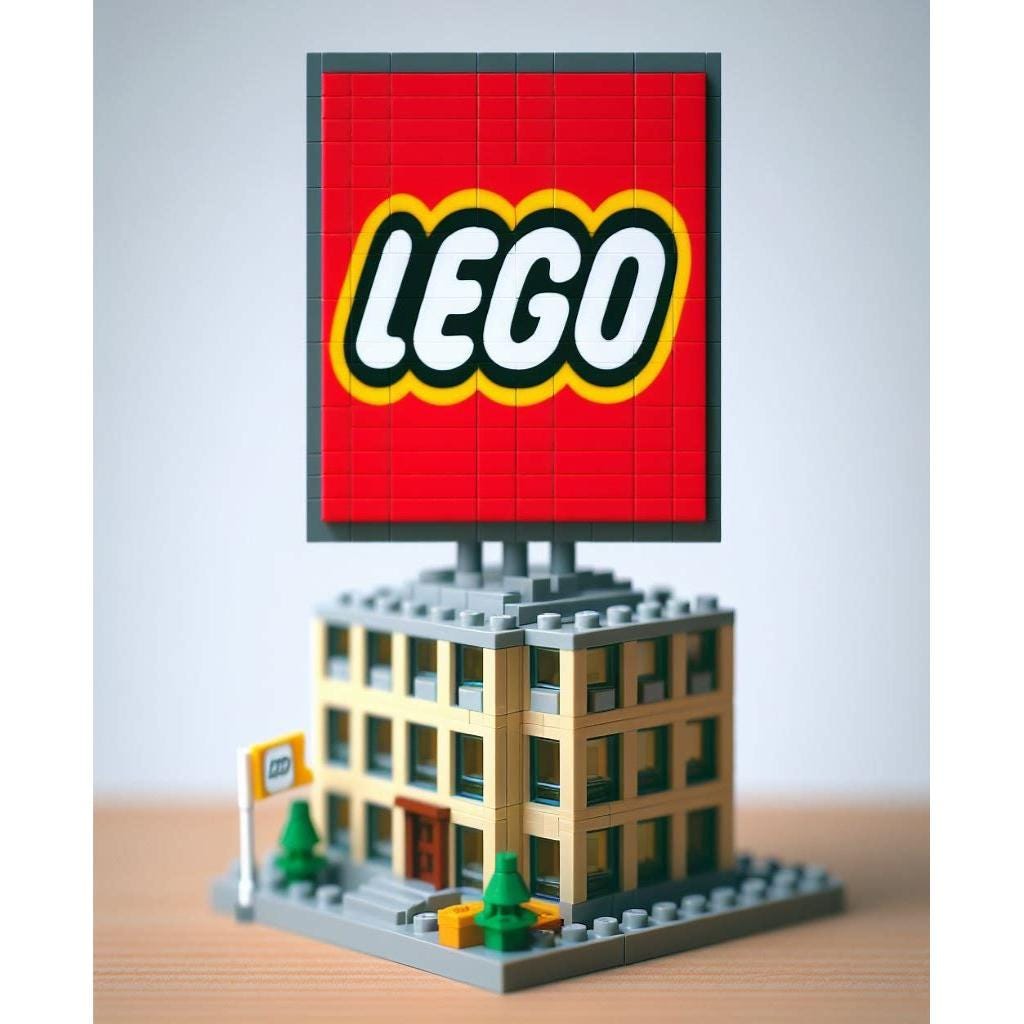
My first encounter with envy was when I was 6 or maybe 7. My neighbor Jacob (who was a year younger to me) was shifting to a new house. His father recently got promoted and in those days promotion was accompanied with a bigger house. I was definitely not envious that Jacob was moving to a bigger house in a nicer locality, though I would certainly miss the Christmas cake that his mom baked. My source of envy was the new tenant who moved in after Jacob. Kshitij and Chandita had moved into Jacobs house and were the culprits. Well, not them as individuals but what they had in their treasure of toys. Uncle Sharan (their father) had briefly worked in Canada before moving to India and K&C had a set of LEGO building blocks. Every kid in the locality wanted to play with those blocks and without any effort Kshitij had become the most sought after kid in the locality. Among the rest of us, the best toy that we had was a cheap plastic "Leo Toy Gun ''. The rest of our toys included those hidden marbles, skipping rope (I still don't know why parents labeled them as toys) and a bouncing "dog ball". What had taken me years to build as a reputation in my locality (इलाका), Kshitij took days to build. We could easily make out that the plastic of the LEGO block was far more superior than our best "Leo Gun". The click sound that the two LEGO blocks made while joining was unbelievable and for the first time thanks to those LEGO blocks our parents saw a set of boys "playing" peacefully - all the rest of the games that we played as boys, involved a fairly high decibel level of noise and violence. In that sense, a set of kids in India were truly following what LEGO meant - a Danish brand derived from the Danish words "leg godt" that means "play well".
The clutch power, when two LEGO blocks join together and make that nice click sound is the result of chemistry and precision engineering. Lego Bricks are made of a plastic called acrylonitrile butadiene styrene (ABS). It came into the commercial market in 1954 and LEGO capitalized on it. The hardness and rigidity of the plastic create a distinct noise as the LEGO studs of one block engage with the tubes of the other block. Chemistry plays a huge role in that "click sound" but precision engineering also has a say along with geometry of the studs and tubes. The studs have slightly tapered sides, allowing them to fit snugly into the tubes of another brick. It took years of constant experiment in design to come up with this tube and stud mechanism of locking. LEGO patented this "clutch power" in 1958 that lasted for 20 years. After the expiration of the patent in 1978 a set of companies replicated the design (Mega bloks, K'Nex, Best-Lock) but by then LEGO had built its brand.
LEGO certainly did not invent ABS plastic (that credit goes to the Borg-Warner Corporation) but was the first one to realize its potential in toys. Where LEGO deserves the credit is its ability to execute Lincoln's famous statement - "The best way to predict the future is to create one". Ole Kirk Christiansen, who was a master carpenter, founded LEGO in Billund, Denmark in 1932. Until the invention of ABS plastic, his primary business was wooden toys. He was a master toy maker who truly believed that "only the best is good enough". The story goes that one day when Ole Kirks' son Godtfred Kirk (who will eventually become the CEO) was 12 year old and was working on the wooden toys, saved some money by using just two coats of varnish instead of the usual three on a set of toy ducks. When Ole Kirk came to know of this, the father forced the son to go to the train station, get that carton of ducks and asked his son to spend the rest of the night doing the third coat before shipping it the next morning. The company almost 100 years later sticks to this principle and a mural-size photograph of a plaque with the motto “Det bedste er ikke for godt”—“Only the best is good enough”—graces the entrance to the cafeteria in the LEGO Group’s Billund headquarters. Just like any startup the company believed in the principle that "Innovation is a numbers game". You keep on experimenting enough and eventually you will have a winner. As a part of one of the experiments LEGO acquired a plastic injection moulding machine. It was the first toy manufacturer to acquire a plastic injection moulding machine in 1946 and it costed them twice the previous year profit. And remember this was a carpenter who was more adept with wood than plastic. However, the ABS plastic was still not in the commercial market and the initial Lego Mursten (brick in Danish) were not the most popular toys with the kids. In fact plastic toys accounted for less than 10% of LEGOs revenue before the 1950s. The bricks did not bond well together and suffered from what they called the "spring effect" - the bricks will bind for a short time and then snap apart. Things changed when the ABS plastic came to market and LEGO had the answer to the problem. The flexible property of ABS made the bricks stick together and the "spring effect" was eliminated and in the process LEGO became fun. Kids can build complicated structures without having to worry that the bricks will come apart.
Besides being lucky with the ABS plastic, there was another lucky ticket that Godfret bought. In January of 1954 as he was on a ferry crossing the North Sea for a trip to the London Toy Fair, he met a toy buyer on the ship. The toy buyer was from Magasin Du Nord, the largest department store in Copenhagen.The buyer mentioned that instead of developing a one-off product, toy makers should focus on developing a cohesive system where sets of toys were interrelated. A system like this would create a repeat business for the brand. Imagine a kid gets a new toy (say a LEGO fire truck) whose components are compatible with the last Christmas racing car toy and the kid can be creative to build new toys using the bricks from the two separate toy boxes. As software engineers we are so proud of backward compatible products but LEGO beats all the software products when it comes to backward compatibility. You can take a LEGO brick from 2024 and it would be compatible with the LEGO brick of 1958. A kid can take his great grandfathers' LEGO block and combine it with his LEGO set. Armed with ABS, backward compatibility leading to repeat business, LEGO did the unthinkable. It dropped the line of wooden toys (that accounted for 90% of the sales) and focused entirely on this new strategy. The strategy could have been fatal for the company but that is how risk works. Whichever side the coin falls, you will be called insane - either insanely lucky or insanely stupid. For LEGO the coin fell on the right side.
My tryst with LEGO lasted for a couple of years when Kshitij and the rest of us would play with it and soon outgrew it. Sharan uncle had moved back to India and none of the parents could really afford to buy a LEGO set for us. We moved to sports like cricket, soccer,marbles, spinning tops that were more budget friendly. Almost 15 years later, I had my next encounter with LEGO - this time in a different timezone and location - the third floor of the MIT Media Lab. As I joined the Media lab and was working on computer vision, a set of students under Professor Resnick were working on a programmable LEGO block, that most of us now know as LEGO MindStorms - the programmable robots. Prof Resnick was a student of Seymour Papert. Many of us whose first introduction to computers was via the Logo language, should thank Prof Papert for inventing the language. He had built the language as a mechanism to support the development of new ways of thinking and learning. My first real coding experience was simulating a game of cricket using the Logo language. Lego Mindstorms was the next logical step for Prof Papert's vision that Prof. Mitchel Resnick and his students were pursuing at the lab. The thousands of the lego bricks and the hardware for it made that corner of the floor the busiest and the most attractive one.
Mindstorms turned out to be a great product for LEGO but it will be fair to say that there was certainly a huge element of luck in it. When Mindstorms debuted in 1998 at a price of $199, besides a few hundred LEGO bricks it had a software application that customers could use to program a microcontroller-based brick, dubbed the RCX (Robotic Command Explorer). This software was the innovation and accounted for the sharp rise in the price. Right after the launch, a smart Stanford student reverse engineered the RCX brick and put the code on the internet for anyone to access. One thing leads to another and a Motorola engineer took the baton and created a programming tool called Not Quite C (NQC), a text-based language that allowed skilled hobbyists to add more detailed features for controlling the Mindstorms hardware. Germany was not far behind. Germany was the largest market for LEGO and a student at the University of Karlsruhe developed an open-source operating system called legOS. This was four times faster than the original LEGO software. The company was alarmed and the LEGO lawyers were all ready to sue the "culprits". Thankfully lawyers lost the case as the Mindstorms team believed that hacking the code means that they have a winner. Why would an adult hobbyist take the pain of reverse engineering the code unless (s)he was really in love with LEGO. This also proved that there were enough Adult Fans of Lego (AFOL) and that the LEGO market was not restricted to the 6-12 year old kid. LEGO catapulted the creativity of its fan by adding a "right to hack” to the Mindstorms software license and creating a Mindstorms website with its own discussion forum. The results were astounding as LEGO fans started collaborating over the forums and came up with some incredible creation. Watch out this video (
) to see what a loyal fan base can lead to. It is a video of the iconic Bugatti Chiron built out of ONLY Lego and one can drive it as well.
An area where LEGO has not done well and has rather failed is the computer animated play experience. The company had thought about this way back in 1995 and had initiated a project called Darwin whose goal was to digitize the LEGO bricks and provide children with both a physical and a digital medium to play with the LEGO bricks. Some of the best folks were assigned to this initiative and these employees got a distinctively upper status than the rest of the LEGO employees. The project lead drove a Porsche in the streets of Billund and that culture percolated down to the rest of the team. The rest of the LEGO team were used to a modest lifestyle. For the new to succeed, it has to amalgamate well with the old to create the new. This was missing in this case. The Darwin project was a failure and eventually the charter was given to the LEGO London's division called LEGO Media. LEGO Media took the usual route of outsourcing (as it felt that software was not the core for LEGO) and while it gave some short term boost, but if you look in 2024, LEGO has certainly missed a huge opportunity in the "digital world". As I read the Darwin story of LEGO, it reminded me of the early days of AWS in 2004. Back then when Amazon was considered still a retailer selling BMVD (Books Music Video DVD), taking something as audacious as AWS was challenging. Pundits would have given Microsoft and Google a better chance of success but AWS continues to lead the pack of the "cloud market". The key difference between Darwin and AWS was the fact that while the AWS team was given enough independence and some of the best engineers were allocated to it, the team was always grounded. There was no special treatment for this set of AWS folks and the team truly believed that it was a Series A startup funded by Amazon (no question of a Porsche car :)). Had Darwin team been better integrated, just like Amazon where AWS is now the center of attraction than the retail business and certainly is the key to healthy margin, LEGO could have moved from a 10% margin business to 80% margin and continue its aggressive path of innovation.
LEGO should definitely thank its stars for not screwing up its partnership with the Star Wars franchise. When the idea was floated to the senior LEGO management about a potential partnership with the Star Wars series, most of them said - "OVER MY DEAD BODY". The reason for their emotional blast when distilled to logic were two. First was the fact that the company strongly believed that they knew their customers and were the master toy maker and could predict what the kids wanted next. This was definitely backed by their last forty years of successfully satisfying their customer with bricks, wheels, minifig, fire truck trains, space and castles. For a self-sufficient organization, the idea of an external collaboration is a big black mark on their creative excellence. In addition it also meant that a large part of the revenue would go to Lucasfilm. A Danish company paying Hollywood was not palatable. The second and probably the more saner argument was around the brand positioning. LEGO was a "peaceful" toy. One of Ole Kirks' core values was "to never let war seem like a child's play." With that as a core value adding a product line whose name had "war" in it was absurd. Peter Eio, chief of the company’s operations in the Americas, did what you would expect from a smart American, which was - "ask the customers.". LEGO surveyed parents in the United States and its largest market of Germany and the parents of the kids blessed the marriage between LEGO and Star Wars. If an open culture like the US and a conservative market like Germany were comfortable with the idea, then who were the management team to say no to wars. The parents were right and LEGO Star Wars series accounted for a sixth of the company sales.
There was a big downside to the Star Wars series. There is this famous dialogue in Sholey movie - "जब तक तेरे जोड़े चलेंगे तब तक उसकी सांसें चलेंगी" - the same happened to LEGO. Star Wars turned out to be the lifeline for LEGO, without the LEGO management even realizing it. As one executive rightly states - Star Wars was that thick layer of cosmetics hiding the raw blemishes of sticky core business. By late 2003, the LEGO executives realized that of all the LEGO toys only the Star Wars was making money and all others were making losses. With no planned release of Star Wars next year, the writing was there on the wall. Analysts were expecting that the family owned business would eventually be taken by some PE firm who in turn would break the company into smaller pieces and sell it off. LEGOs' financial independence was at stake. LEGO was playing the game of "innovation is a numbers game" and was trying multiple avenues - Computer Games, Media, Legoland theme parks, increasing its retail stores. Most of these initiatives were losing money and that is where the story and numbers philosophy help. One of LEGOs' founders motto was - "We would never be the biggest, but being the best was good enough.". The then CFO Ovesen took this story and the struggling finance of 2003 and translated that into a number - 13.5. Anything that could not generate a 13.5 return without diluting the quality was shelved. It gave a clear signal that innovation has to be backed by real profits. A lot of product lines and initiatives were painfully shut down that did not meet this 13.5 number. The most problematic was the theme park business - LEGOland. Kristiansen (the then president) was reluctant to sell it as his father had launched the first LEGOLAND and while he was able to delay the decision, the 13.5 number won against emotion and the LEGOLAND had to be sold. The hardship gave results - the PEs continue to wait for the next blunder and as of now LEGO is still owned by the family which started the company.
One of the good things about the LEGO 2003-04 financial crisis was that it understood its customer better. Starting with the philosophy that in times of crisis reduce the world to customers who matter, LEGO initiated the Core Gravity project. The goal of the project was to connect and understand its most loyal customer base. There were a few surprises for the company. The executive felt that the LEGO was at best a solitary play experience and the LEGO kids would be a bit of a social pariah. The study proved that the kids were normal and LEGO blocks and XBox were not mutually exclusive. The same kid was playing with both. The other big learning for them was that the LEGO brick was a catalyst for creativity. Thanks to the study the team realized that while LEGO was operating in a niche market, but it was a sizable niche. Thanks to its positioning the company realized that a smart kid entering a store should demand for "a toy and a LEGO" and not two toys or two LEGOs. If the kid demands two toys, (s)he will get one toy; a demand for two LEGOs would result in only one LEGO in the basket but a demand for a toy and a LEGO has a high chance of being accepted by parents without any edits.
As I read these stories, what stood out for me was neither the creativity of the LEGO toys (something that I already knew) nor the financial turbulence (every company goes through it). What stood out was the transformation of the city of Billund. Just after World War I, Billund was described as “a God-forsaken railway stopping point where nothing could possibly thrive”. The economy was entirely based on agriculture. A carpenter with a small workshop and bold vision embarked on a journey full of risk and took up a subject that he was not trained on (plastic) and created a company that makes enough LEGO bricks (60 billion each year) which is good enough to lay a path from earth to moon and then back again. In the process he transformed the "God-forsaken" railway stop to a city which has its presence felt in almost every second couch in the world (my estimate is that there is a hidden LEGO brick in every second or third sofa set in this world). A lot of us have left our small hometown and have created something meaningful for ourselves but only a handful have gone back to their small hometown and transformed it by setting up a truly global company. I hope that the stories in this weekend muskiri will inspire a few to take the leap of faith in transforming some of these small neighborhoods and towns.
Trivia:
What does the word LEGO mean?
What is the plaque that graces the entrance to the cafeteria in the LEGO Group’s Billund headquarters?
What is the plastic that makes a LEGO block?
What was the motivation behind the 1960s LEGO campaign of “real as real.”?
Who produces more tires – LEGO, GoodYear or Bridgestone?
What is the origin of the word DUPLO?
Kjeld Kirk Kristiansen is the former President and CEO of The Lego Group (1979–2004). He is the grandson of Lego founder Ole Kirk Christiansen. What is unique about this name?
Which was the first year when LEGO (a company founded in 1932) reported a loss?
How much does Disney make by licensing its IP to manufacturers?
What was the LEGO Darwin project and why did it fail?
Who was the second non-family (after Poul Plougmann) CEO of LEGO and how did he turn around an almost bankrupt LEGO in 2004?
Which educational institute was the inspiration behind the LEGO Mindstorms?
Which was the LEGO toy series that created the ball-and-socket connector?
Soon after the LEGO Mindstorms release in 1998, a Stanford University graduate student cracked open the RCX brick and revealed to the world what was inside. He reverse-engineered the RCX brick’s microcode as well as the firmware and put his discoveries up on the Internet. Why didn't LEGO sue him?
What does being a T-shaped person mean?